
Consent, trust and promises kept: how we work with communities when a crew is allowed to film a sacred ceremony in Papua New Guinea.
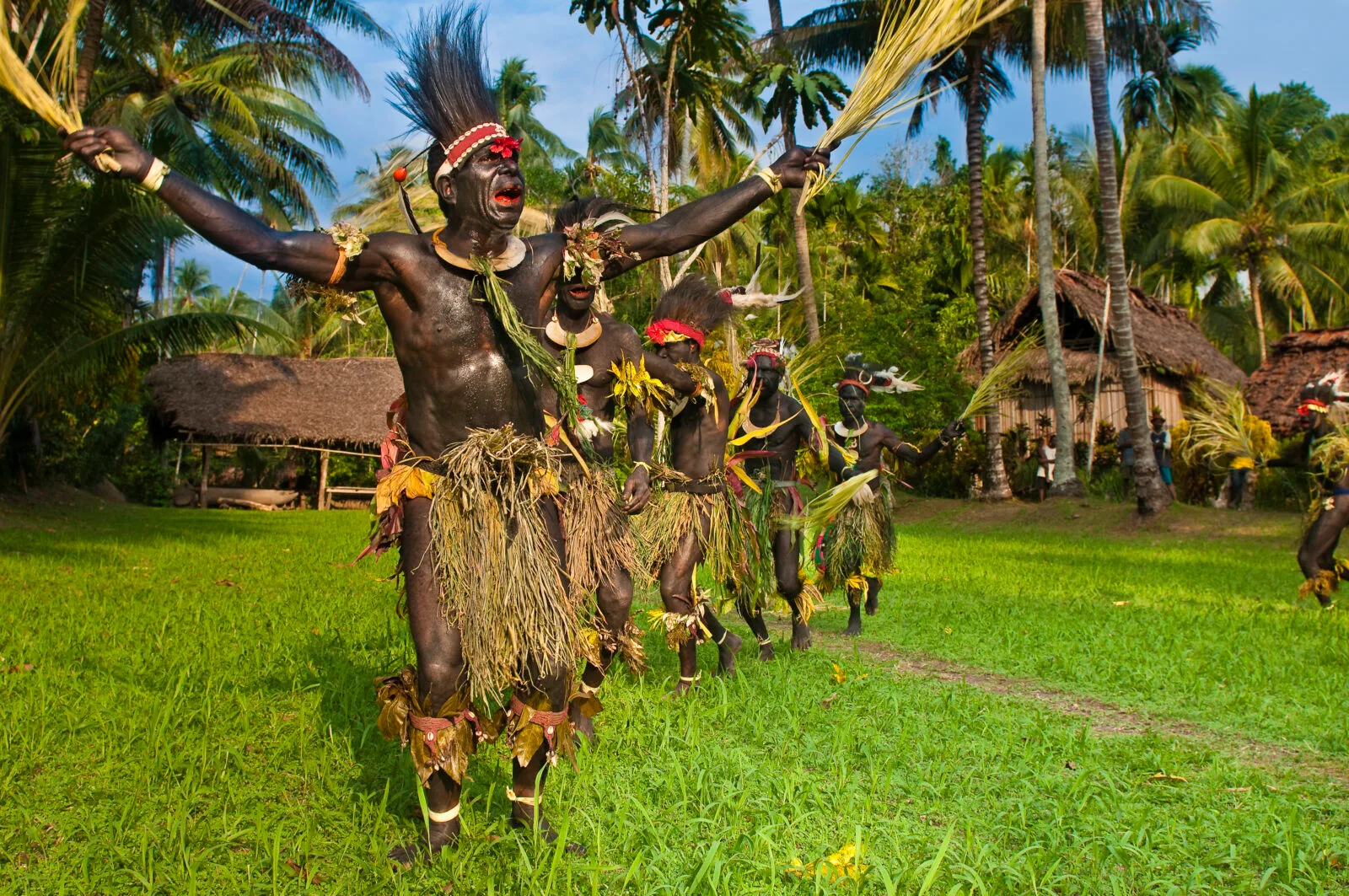
In Kanganamun village, on the Sepik River, our crew was given an exceptional permission: to film inside the sacred space where boys were being initiated into adulthood during the crocodile skin ritual. That permission came with a promise. When we brought the finished film back to the village the following year, that sequence would not be shown: no secret of the initiation could be shared with the wider Iatmul community. The photo illustrating this article was approved by the community for publication online.
The promise sums up what filming sacred ceremonies in Papua New Guinea really involves. Permits and logistics matter, but they come second. What makes these films possible is trust, built over years and respected long after the crew has flown home.
Not every ceremony is sacred
First, an important distinction. Large cultural events such as the Goroka Show are public celebrations. They were created decades ago, they attract many visitors, and they are not sacred in the strict sense. Filming them rarely raises questions of permission: they are meant to be seen. (See our guide: Highlands festivals: when they happen and how to film them.)
Secret ceremonies are a different world: initiations, scarification rituals, mourning ceremonies. They are closed to outsiders, and sometimes to large parts of the community itself. Women, children or non-initiates may not be allowed to see certain moments. Filming them requires a completely different approach.
Access starts years before the shoot
You cannot arrive in a village and ask to film a secret ceremony next week. Access depends on long-term relationships.
Over the years, PNG Fixer has built close ties with a number of communities. We stay in regular contact and return to see them every year. That is how we learn when a ceremony is being prepared, sometimes weeks or months in advance. And that is why a community may agree to let a crew witness something it would never show a stranger.
For a production, this means that the window to film a sacred ceremony is set by the community’s calendar, not by the broadcaster’s schedule.
Consent is collective
In Papua New Guinea, the agreement to film is never given by a single person. It is given by the community as a whole.
In practice, this means large meetings with the big men and the clan leaders, where the project is explained and discussed and where the conditions are set. There is no shortcut: a deal made with one individual, however influential, is not enough and can cause serious problems on the ground.
Some rules only appear on the day
Even with a clear agreement, it is impossible to know in advance every restriction a community will set. During the ceremony itself, the elders may say: don’t film this person, don’t film this place, stop filming now. Some moments must remain completely secret.
Crews need to accept this from the start. A sacred ceremony cannot be scripted, and a shot list must stay flexible. Respecting a last-minute “no” is not a loss for the film: it is what makes the rest of the film possible.
Compensation, the traditional way
Filming a ceremony usually involves compensation, and it is often traditional. On the Sepik, it took the form of betel nuts, food and cash. The same principles apply on the mainland.
Compensation is not a fee paid for a show. It acknowledges the community’s time, its resources and the value of what it is sharing. Getting it right, in amount and in form, is part of the fixer’s job and should be planned in the production budget from the beginning.
Bringing the film back
Whenever possible, we bring the finished film back and screen it in the community the following year. It is one of the most important moments of the whole process: people see how their ceremony has been represented, and the relationship continues.
That screening also has rules of its own. On Kapo Island, during the filming of a circumcision initiation, the footage shot inside the sacred space was cut from the village screening, because the people watching included those not allowed to see it. The film made for the world and the film shown at home are not always the same.
What this means for your production
- Allow time. Sacred ceremonies follow the community’s calendar. Contact us as early as possible.
- Expect collective negotiation. Agreements are made with the whole community, through its leaders.
- Keep your shot list flexible. Some restrictions will only be known on the day.
Filming the sacred in Papua New Guinea is a privilege, not a right. With the right preparation, it leads to images no one else can make.
Planning to film a ceremony in Papua New Guinea?
Tell us about your project: the first call is free.