
Home › The essentials
Filming in Papua New Guinea: the essentials in 5 minutes
Updated November 2026 · Marc Dozier
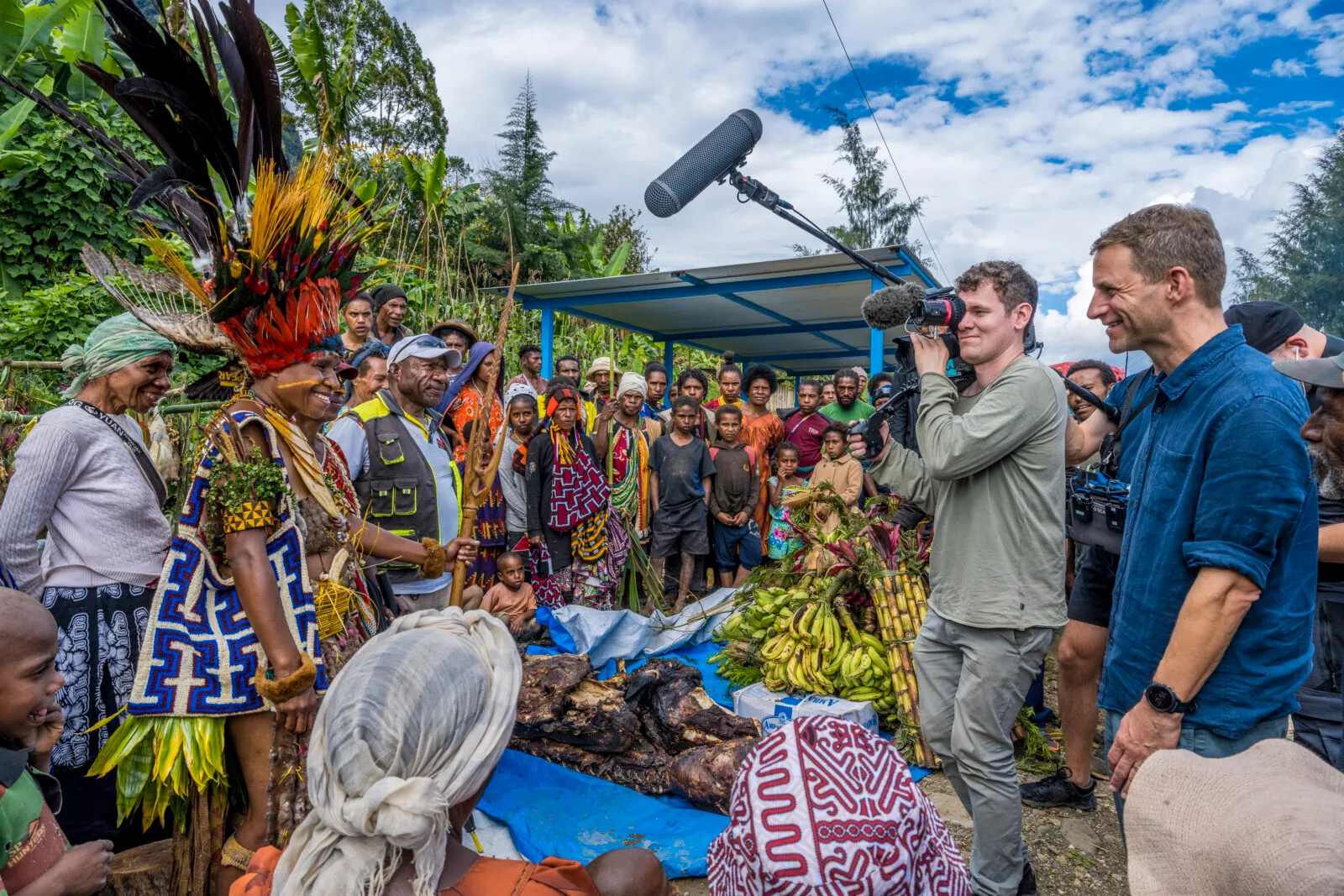
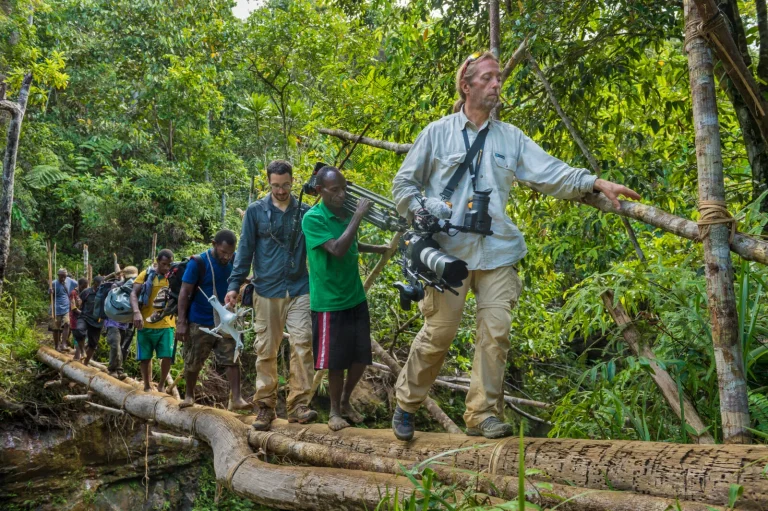
Photo: Florian Bahrdt and the ARD crew at the bride price ceremony, 2024. © Marc Dozier
- Permits, visas and timing
- Where and when to film
- On the ground
- Budget, crew and references
- Frequently asked questions
Not sure it can be done?
One call usually saves more than my fee. The first call is free.
Papua New Guinea is one of the most rewarding countries to film in, and one of the most complex. Around 97% of land under customary ownership, few roads, and a permit process that runs through five government offices. This guide brings together what a production needs to know before committing to a shoot.
It is written by Marc Dozier, who has been exploring Papua New Guinea since 1994 and has worked as director, fixer and location producer for Netflix, BBC, Discovery, National Geographic, ARD, Arte, RTL+, Canal+ and France Télévisions. Everything here comes from our own shoots and from official sources, listed at the end.
In short
- Every documentary needs a government film permit. Allow around two months; with a complete file, sometimes one.
- Crew members need a Journalist or Film-maker visa. Tourist visas and Visa on Arrival are not accepted for filming.
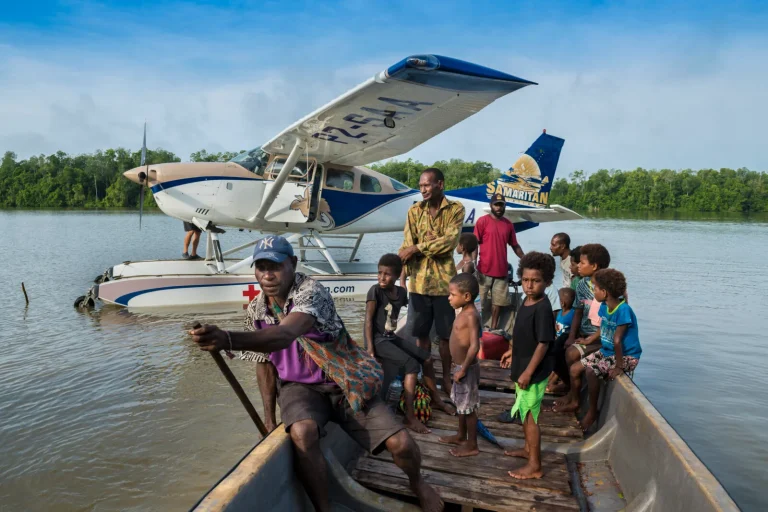
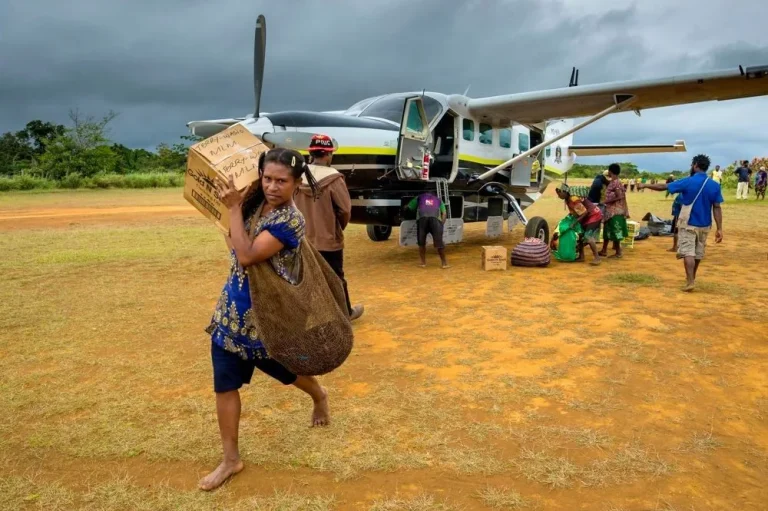
- Most regions are reached by plane, and some only by small plane or boat. Travel time shapes the schedule.
- The country is expensive to film in, and there is no national film incentive at the time of writing.
Permits, visas and timing
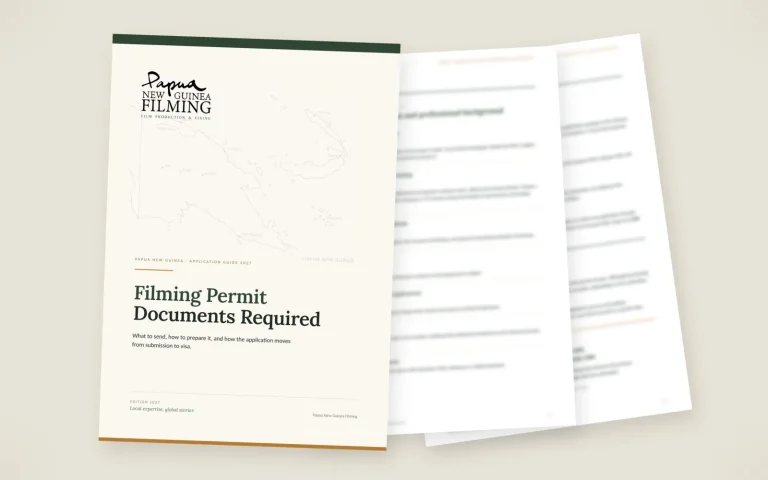
The permit decides your calendar, so it comes first. The full procedure, with the visa table and the list of documents, is on our filming permits page.
The PNG National Film Institute (NFI) first reviews the project, coordinates provincial approvals for every province outside the National Capital District and informs the Department of Foreign Affairs. The Prime Minister’s Office – Media Unit then issues a clearance letter, which replaces the press card for visiting crews. Once all letters are in hand, each crew member applies for a visa to the PNG Immigration & Citizenship Authority (ICA): USD 500 for a Film-maker visa, USD 350 for a Journalist visa (Visa information booklet 2025).
Other authorisations. Drones (CASA PNG), equipment (PNG Customs), and separate approvals for prisons, hospitals, schools, mine sites and government buildings.
A local host company. Foreign productions must be hosted by a company registered in Papua New Guinea, which sponsors the Film-maker visas. Papua New Guinea Fixer is that company.
How long? There is no fixed processing time. Allow around two months; with a complete, well-prepared file it can take one. Start as soon as your dates and regions are roughly known: a final schedule is not needed to begin.
What it costs. Around USD 1,500 for the NFI, plus visa fees for each crew member and the fee for handling the file (PNG Fixer has handled these applications for more than 20 years). There are no provincial fees.
Overall lead time. Contact us at least two months before the shoot. A simple recce can be organised at much shorter notice, sometimes a few days ahead.
Where and when to film
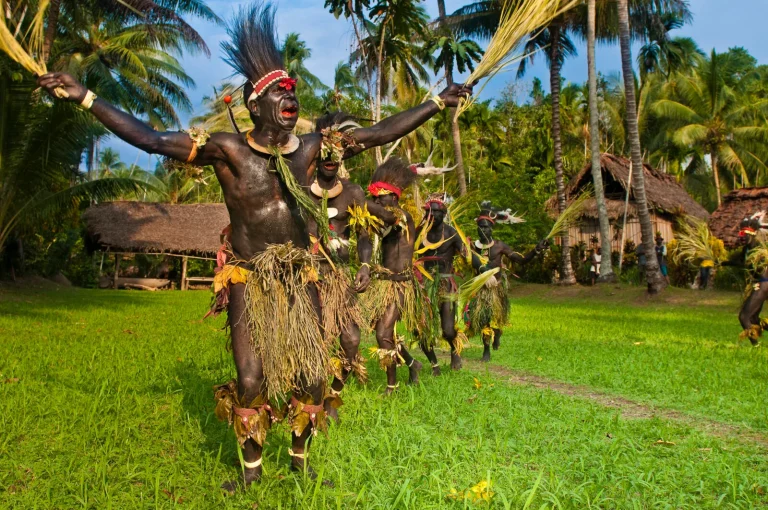
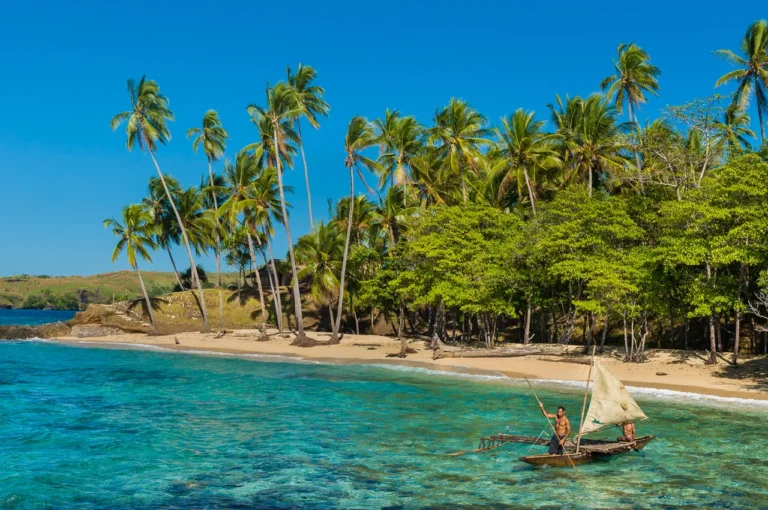
We have filmed in every province, with local contacts in each. Every crew lands in Port Moresby; from there, almost every region is a domestic flight away. The dry season, roughly May to November, suits most of the country, and the big festivals fix the dates for many shoots.
| Region | What to film | Getting there | Best time |
|---|---|---|---|
| Port Moresby & Central | Politics, justice and prisons, city life, Second World War history, Kokoda Track | International flights to Jacksons Airport; roads only reach Central Province | Dry season, roughly May to November |
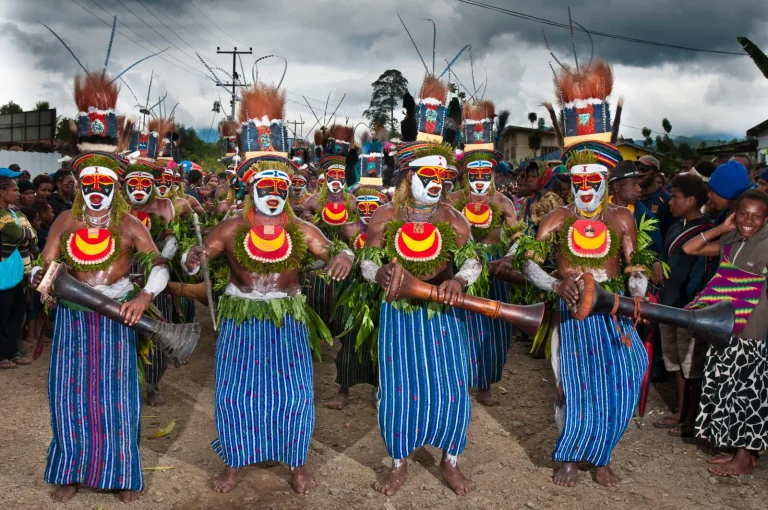
| Highlands | Mount Hagen and Goroka shows, Huli wigmen, Asaro mudmen, clan politics, coffee and mining | Flights to Mount Hagen, Goroka and Tari; Highlands Highway from Lae | Mount Hagen Show in August; Goroka Show around 16 September |
| Sepik | Spirit houses and carvers, crocodile initiation, life by dugout canoe | Fly to Wewak, road to the river, then motorised canoes; village stays | Sepik Crocodile Festival in August |
| Madang & Morobe | Reefs and diving, wartime wrecks, rainforest research, port life in Lae | Flights to Madang and Lae (Nadzab) | Year-round; heaviest rain early in the year |
| East New Britain | Baining fire dance, Tavurvur volcano, Tolai shell money, wartime tunnels | Flights to Tokua (Kokopo) | National Mask Festival in July |
| West New Britain | Kimbe Bay reefs and stilt villages, active volcanoes, oil palm | Flights to Hoskins, boats to the islands | May to October |
| New Ireland | Malagan carving, shark callers, surfing and diving | Flights to Kavieng; east coast road | July and August |
| Milne Bay & Trobriand Islands | Yam harvest and Milamala, the kula exchange, sailing canoes | Flights to Alotau, small planes to Losuia | June to October–November |
| Oro | Tufi fjords, tapa bark cloth, north end of the Kokoda Track | Flights to Popondetta, small planes or boats to Tufi | June to October–November |
| Gulf & Western | River deltas, remote communities, mining, expeditions | Charter flights and boats; long travel times | June to October–November |
| Bougainville | The road to independence, Panguna mine, reconciliation, wartime relics | Flights to Buka; road south to Arawa and Buin | June to October–November |
Festival dates can change from year to year: check them before booking flights. Domestic flights are the backbone of any itinerary, and excess baggage for camera kit is a real budget line.
On the ground
Landowners and communities
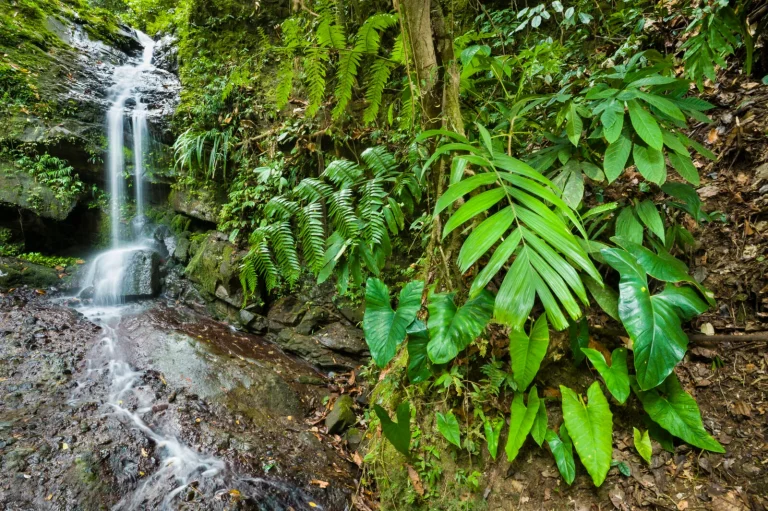
This is the part that actually decides whether a shoot happens. Around 97% of land in Papua New Guinea is held under customary ownership by clans and families, and a national permit gives no right to film on it. Access is negotiated locally, with landowners, village leaders and the people in front of the camera.
We hold these meetings before the crew arrives, in Tok Pisin or the local language. We agree in plain terms on what will be filmed, when, and on any fees or compensation, and we explain consent to contributors so that everyone understands it. A misunderstanding with a clan can stop a shoot overnight.
Safety and health
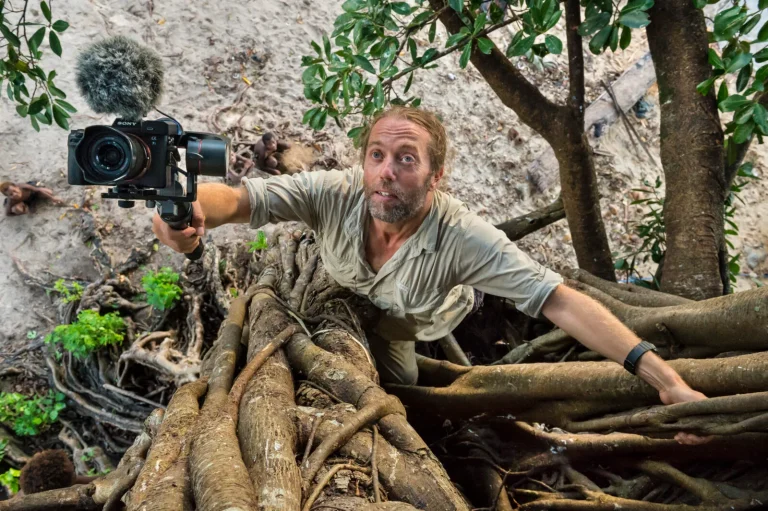
The safety of the crew is our first mission. Crime levels are high in Port Moresby and in some Highlands towns, and a road or a whole region can become unsafe from one day to the next.
- No road travel at night
- A representative of the region or community travels with the crew
- Security conditions checked daily, plans adapted if needed
- Satellite communication in remote areas
- Local escorts in the Highlands and, on some routes, police escorts
Malaria is present in most of the country and dengue also occurs: see a travel clinic well before departure. Medical facilities are limited outside Port Moresby, so insurance covering medical evacuation is essential. Drink treated or bottled water only, and read your government’s latest travel advice before you go.
Drones
Most camera drones can fly under the standard CASA PNG conditions; night flights or flights over populated areas need a specific approval. We always explain the flight to villagers first. Drone rules in detail →
Equipment and customs
Professional kit enters under the PNG Customs temporary import procedure, without paying duties. ATA Carnets are not used: bring an equipment list with serial numbers and values. Customs procedure in detail →
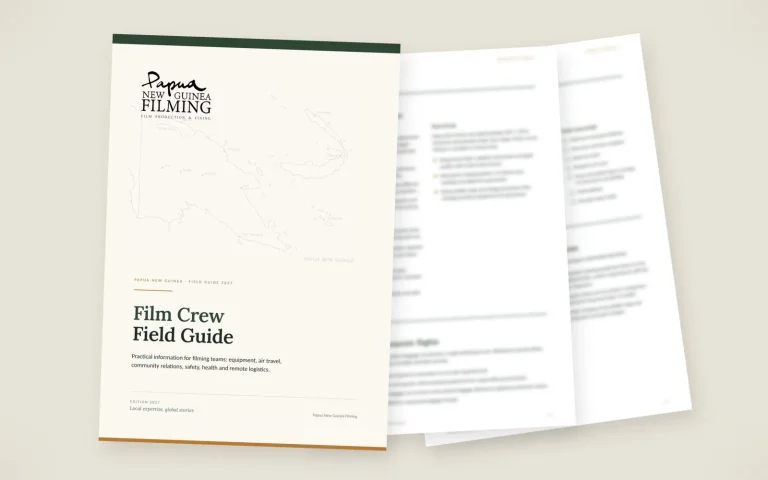
For the practical side — health, luggage, power, equipment, cash, safety — every production we work with receives our Film Crew Field Guide before departure.
Budget, crew and references
What weighs in a PNG budget
Papua New Guinea is an expensive place to film. The country imports most of what it uses, services are limited and prices are often higher than in Europe. There is no national film tax rebate or production incentive at the time of writing.
- The NFI fee (around USD 1,500), visa fees for each crew member and administration fees
- Domestic and charter flights, and heavy excess baggage for equipment
- 4×4 hire, boats, drivers and fuel
- Hotels in town; generators, food and bedding in remote areas
- Security, guides, porters and community fees
In one phone call we can tell you whether an idea is feasible, what it will really cost and which season it needs. The first call is free.
Crew size
We have handled crews of every size, from a two-person news team to productions of 30 people.
Some productions we have supported
| Production | Broadcaster | Year | Our role |
|---|---|---|---|
| Inside the World's Toughest Prisons — Bomana | Netflix | 2018 | Location producer |
| Wilderness with Simon Reeve | BBC Two | 2026 | Production advice |
| Island of the Walking Sharks | Discovery Channel | 2022 | Permits, logistics, coordination |
| Reverse Exploration: two Papuans discover France | National Geographic, Prime Video, Canal+ | 2008 | Co-direction and fixer |
| Reise in eine andere Welt (Uri Schneider) | ARD, Arte | 2025 | Full production support and drone pilot |
| Papua-Neuguinea extrem: Hölle oder Paradies? | ARD Weltspiegel | 2024 | Location producer |
| Jenke ohne Grenzen: Papua-Neuguinea | RTL+ | 2019 | Full production support and drone pilot |
| Most Dangerous Ways to School | Arte / ZDF (Maximus Film) | 2015 | Full production support |
| Les Nouveaux Explorateurs: the Asaro mudmen | Canal+ | 2013 | Fixing and logistics |
| Les Nouveaux Explorateurs: the women of Mount Hagen | Canal+ | 2013 | Fixing and logistics |
All productions: see our productions page.
Sources: PNG Immigration & Citizenship Authority — Visa information booklet 2025 · PNG National Film Institute — Filmmaking visa information sheet · PNG Customs Service — Temporary imports · CASA PNG — Civil Aviation Rule Part 101 · Australian Government Smartraveller. Rules change: always confirm with us before you travel.
Frequently asked questions
Can we film in Papua New Guinea on a tourist visa?
No. Foreign crews need a Journalist or Film-maker visa from ICA, issued once the clearances are in hand.
How far ahead should we start?
As soon as your dates and regions are roughly known. The permit alone takes around two months, sometimes one with a complete file.
Do we need a local fixer?
Yes. Foreign crews must work with a company registered in Papua New Guinea, which sponsors the Film-maker visas: we are that company. Beyond the paperwork, every location is negotiated with customary landowners, and logistics depend on local contacts.
When is the best time to film?
The dry season, roughly May to November, suits most regions. The big festivals — National Mask Festival in July, Mount Hagen Show and Sepik Crocodile Festival in August, Goroka Show around 16 September — fix the dates for many shoots.
Is it safe?
With the right precautions, yes: no road travel at night, local escorts, daily security checks and medical evacuation insurance. Crime levels are high in Port Moresby and some Highlands towns.
Which languages do you work in?
English, French and Tok Pisin; on location we also translate from local languages.
Not sure it can be done?
In one phone call we can tell you whether an idea is feasible, what it will really cost and which season it needs. The first call is free.