
On the Sepik, the river is the road. Villages, spirit houses and lagoons are reached by canoe, and every shoot is planned around fuel, water levels and the goodwill of the people who live on the banks.
The Sepik is one of the great rivers of the Pacific. It rises in the mountains near the border with Indonesia and winds for more than a thousand kilometres to the sea, through swamps, grasslands and rainforest. Along its banks live some of the most celebrated artistic traditions in Oceania: carved spirit houses, masks, slit drums and the crocodile initiation that marks young men’s skin for life.
For a film crew, that means one thing: almost everything happens on the water.
Getting to the river
Crews usually fly into Wewak, on the north coast, then drive inland to the river landing at Pagwi. From there, the journey continues by motorised canoe. Some upriver stations can also be reached by small plane, which saves days when the schedule is tight.
Canoes, fuel and time
The river is travelled in long motorised canoes, either carved dugouts or fibreglass boats. Distances are counted in hours, not kilometres, and fuel is the heart of the budget: it is bought in town, carried in drums, and every trip must keep enough for the way back. We plan each leg with the boat drivers, add spare time for rain and breakdowns, and pack camera kit in waterproof cases that can survive a wet landing.
Water levels change everything
The Sepik rises and falls with the rains. High water opens shortcuts through side channels and lagoons but can flood villages; low water exposes sandbanks and closes some routes altogether. Nobody reads the river better than the local drivers, so the itinerary is always checked with them before we commit to a schedule.
Living in the villages
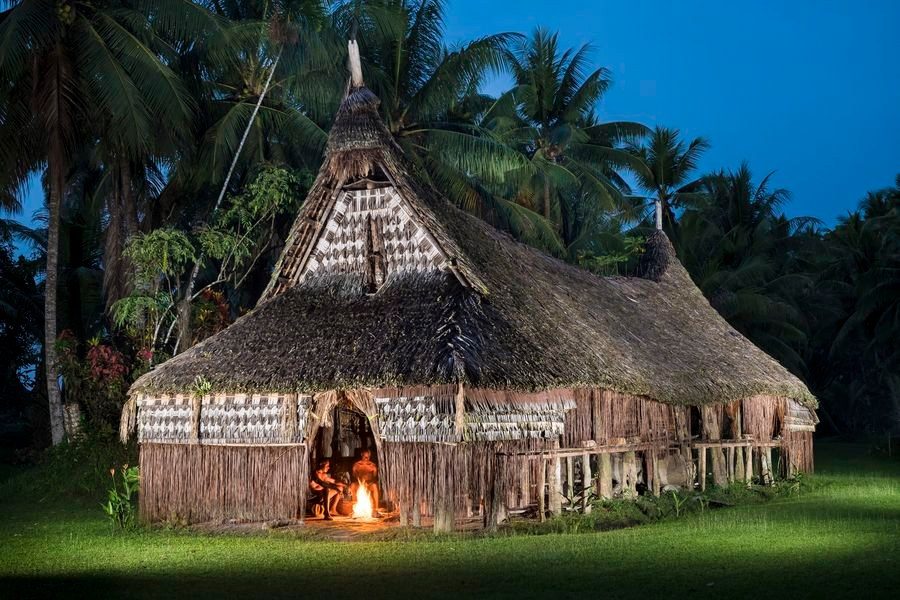
There are few hotels on the river. Crews stay in village guesthouses or family homes, so we bring mattresses, mosquito nets, water filters and a generator to charge batteries every night. Meals are shared with the host family, which is also the best way to meet the people you will film.
Filming with respect
Each village has its own leaders, landowners and rules. Some spirit houses, objects and ceremonies are closed to outsiders, or to women; others can be filmed only after a ceremony or an agreement. We discuss access, fees and what can be shown with the community before the camera comes out, in Tok Pisin, and we keep our word once the shoot is over.
Bringing the story back
Some years ago, the German photographer Florian Spring documented an initiation ceremony in Kandinge, a village on the Sepik, and I wrote the text for his story in the French magazine GEO (issue 509, July 2021). On my last trip to the river, I went back to Kandinge with the magazine. The newly initiated men were gathered in the men’s house, and they discovered the pages together — proud, and delighted to see their ceremony told with respect on the other side of the world.
That moment is part of the job too: what we film belongs first to the people who share it with us.
Sepik shoot checklist
— Fuel budget and drums planned for every leg, including the return
— Waterproof cases, dry bags and spare propeller for the canoe
— Generator, fuel and cables to charge batteries each night
— Mattresses, mosquito nets and water filters for village stays
— Access agreed with each village before filming
— Extra days in the schedule for rain and river conditions
Planning a shoot on the Sepik?
Tell us your subject and dates — we will plan the river with you.