
There is no fixed processing time for a filming permit in Papua New Guinea. Allow around two months, sometimes just one when the file is complete and well prepared. After more than twenty years of shoots in PNG, here are the five things that make the difference.
Every documentary filmed in Papua New Guinea needs a government film permit, whatever the crew or the broadcaster. An application goes through nine steps and five offices: the National Film Institute (NFI), the provincial government, the Prime Minister’s Office, the Department of Foreign Affairs and Immigration. Each one works at its own pace. You cannot make the administration go faster. But you can make sure your file never waits on your side.
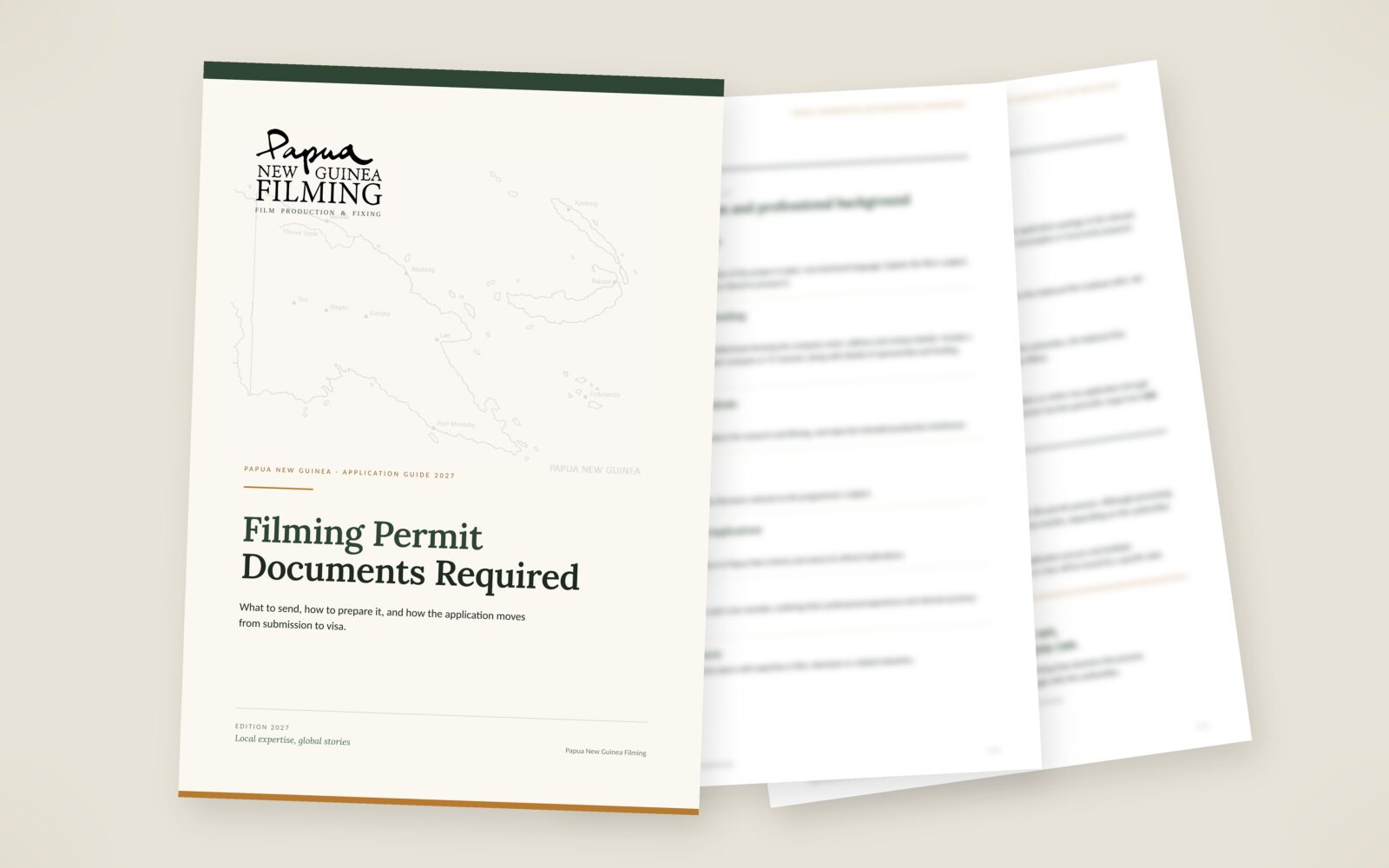
To make this easier, we give every production we work with our step-by-step permit application guide. It explains each document to prepare and each stage of the process, so nothing is missed and nothing waits.
1. Start as soon as your filming period and locations are known
You don’t need a final schedule to begin. An approximate filming period and the list of places you want to film are enough to start the applications.
The locations matter most. Outside the capital, every province you film in has to give its approval, and the National Film Institute (NFI) coordinates these provincial approvals. The sooner the provinces are known, the sooner those requests can go out. Waiting for every detail to be settled is the most common way to lose time.
2. Apply for the right visa
Papua New Guinea has different visas for media work, and they do not take the same time:
- Journalist visa (news and current affairs): about 10 working days, once the clearance from the Prime Minister’s Office Media Unit is in hand.
- Film-maker visa (documentaries, TV series, advertising): around two months, sometimes less when everything is well organised. It needs clearances from the NFI, the Department of Foreign Affairs and International Trade, the provincial administrations and the PM’s Media Unit.
Choosing the right visa does not mean choosing the fastest one. A documentary always needs a film permit: applying under the wrong category only creates problems later. We tell you which visa fits your project before anything is filed. (See also: Filming in PNG: which visa does your crew need?)
3. Send a complete file
The visa application is only processed once every clearance letter is in hand. Behind each of those letters, someone has to read your file. A complete, clear file makes their job much easier, and an easy file moves faster.
A typical file includes:
- a copy of each passport’s bio page
- the entry permit form or eVisa application
- the letter of undertaking from your local sponsor
- your itinerary, with return tickets
- the list of equipment
Keep the description of your project factual and precise. A clear, honest brief is processed faster than a vague one. Every missing document or unclear answer means a new exchange with the office, and while it lasts, the file waits.
4. Get the sponsor letter exactly right
Every crew filming in Papua New Guinea needs a letter of undertaking from a sponsor company legally registered in the country. It is compulsory, and it is one of the documents most often underestimated.
The letter must contain the right information and the exact wording that the Immigration and Citizenship Authority (ICA) expects. If it does not, the visa application is rejected at the very last step, on ICA, after all the other approvals have been obtained. Weeks of work can be lost on a single letter.
We make sure the sponsor letter is complete and correctly worded before the final application is filed.
5. Have every document checked before filing
A file that comes back is the biggest source of delay. Before anything is submitted, we check every document for every production: that nothing is missing, that the information is consistent from one document to the next, and that each office receives exactly what it asks for.
It takes a few hours. It can save weeks.
In short
- Start as soon as your filming period and locations are known.
- Apply for the right visa: about 10 working days for journalists, around two months for documentaries, sometimes less.
- Send a complete file: it makes the officers’ job easier.
- Get the PNG sponsor letter exactly right, or the visa is rejected at the last step.
- Have every document checked before filing.
Every step, with official sources and fees, is in our complete guide to filming permits in Papua New Guinea.
Planning a shoot in PNG?
Tell us your story, your period and your locations: the first call is free.